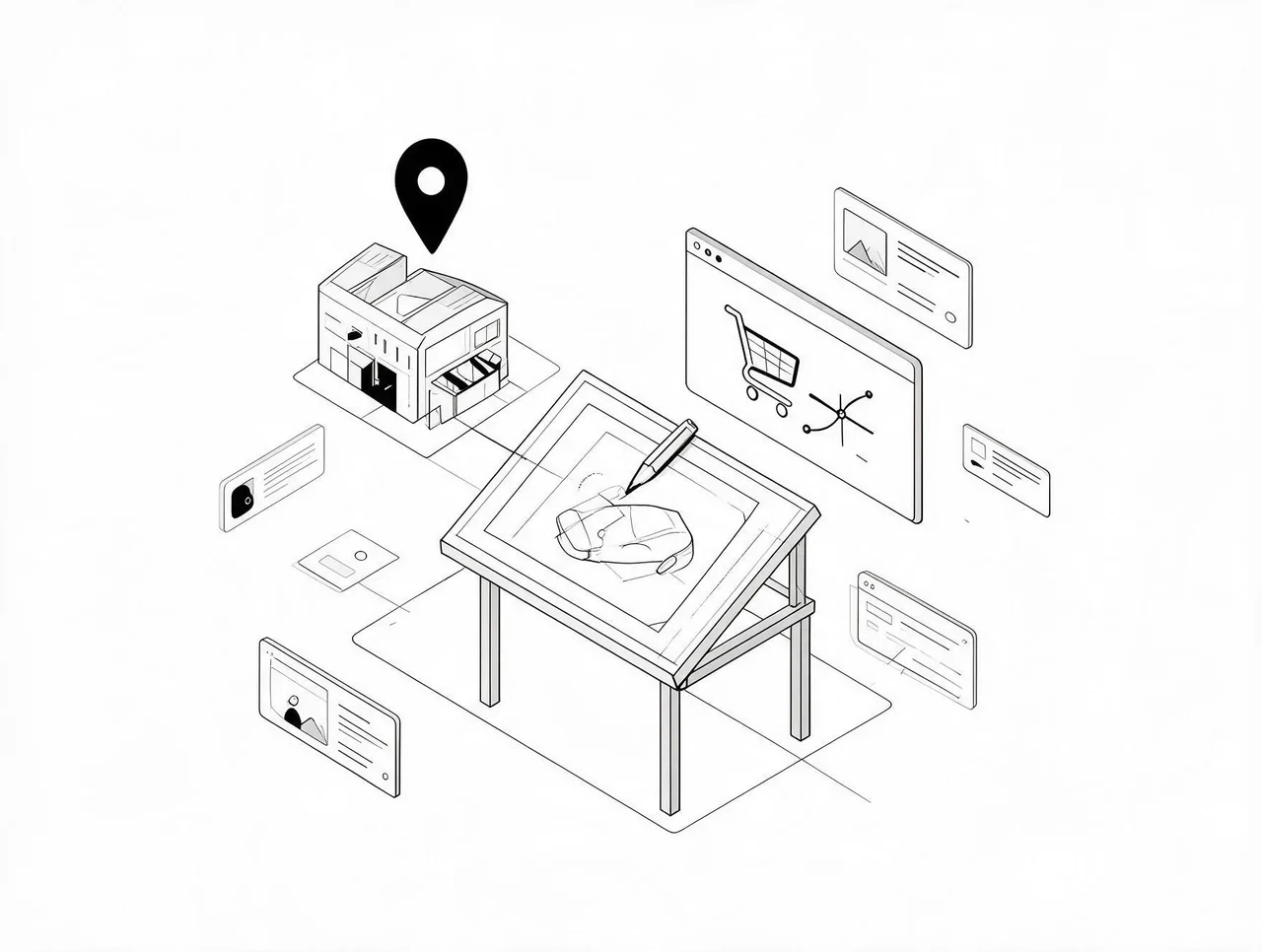
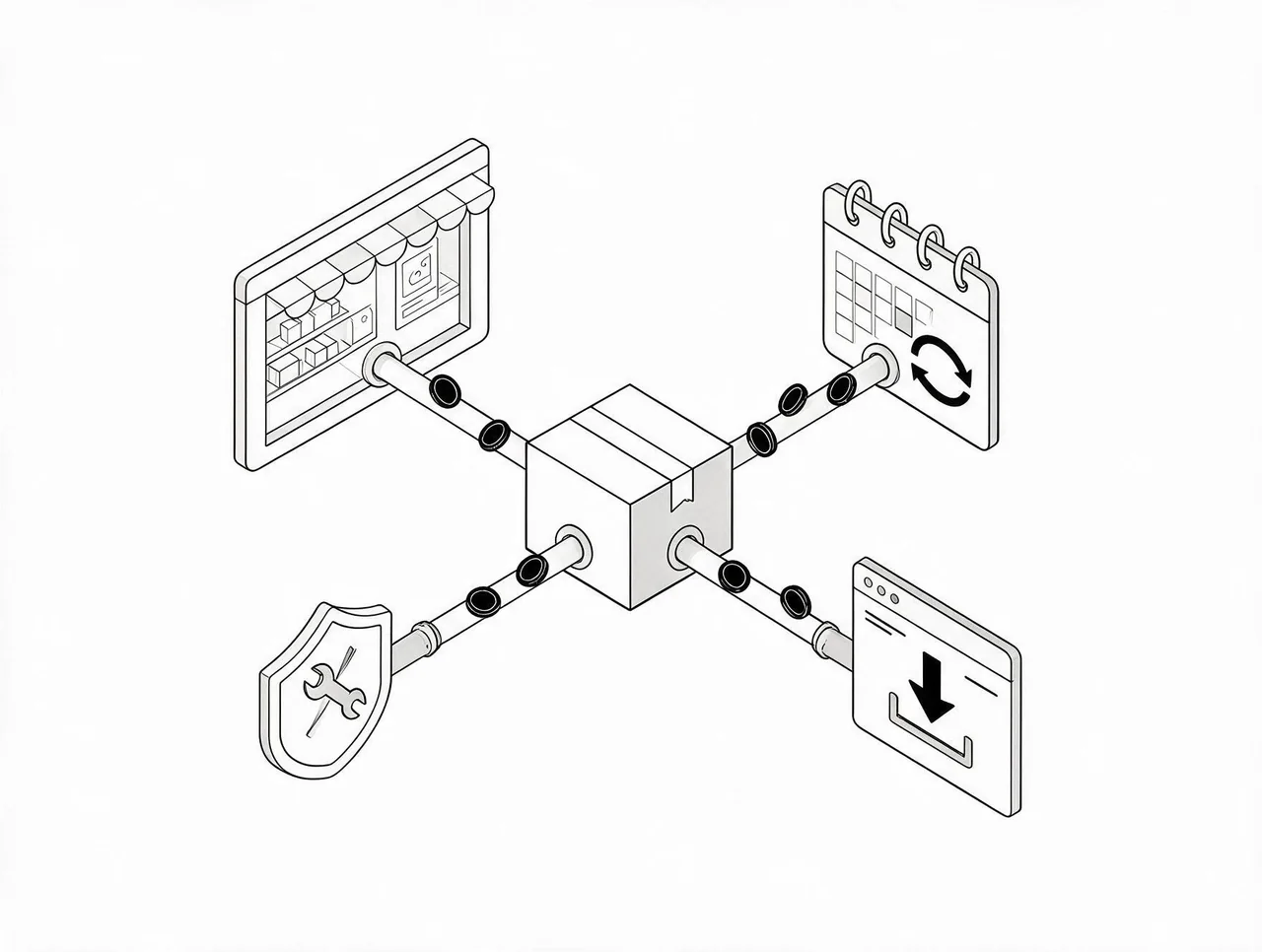
Galey Alix lost her job at Goldman Sachs, her fiancé, and her health on the same day. She built Galey Alix Design around product partnerships, licensing deals, a TV show, and a Shopify storefront. The storefront is one revenue stream, not the business. Most DTC founders never structure their companies this way, which is why they stall.
A single-channel product business has no leverage. When customer acquisition costs rise or a product category commoditizes, the entire model compresses. Galey Alix Design sidesteps this. Product partnerships and licensing generate revenue without inventory risk. A TV show builds brand awareness at zero acquisition cost. The Shopify storefront converts that awareness, but it doesn't carry the entire revenue burden.
If you're spending $15K monthly on Meta ads to drive $50K in revenue, you're renting attention. If those same ads also feed a licensing pipeline or a partnership funnel, you're building equity. The ads don't work harder. They work in more directions.
Emotional Transformation Opens Revenue Streams Products Can't Access
Galey Alix Design is built around emotional transformations. This isn't positioning. It's a business model decision. A brand that promises emotional outcomes can charge for the transformation itself, not just the physical goods. That opens services, experiences, content, and partnerships with brands that want access to that emotional territory.
Most DTC brands differentiate on product attributes. Materials, design, performance. That works until a competitor matches your specs at a lower price. Emotional transformation is harder to commoditize because it's tied to narrative and trust. Galey Alix rebuilt her life through design after a personal crisis. A competitor with better unit economics can't replicate that story.
The tradeoff is specificity. A brand built on emotional transformation must commit to a narrow emotional territory and a consistent narrative. You can't pivot messaging every quarter based on what's converting. But the upside is pricing power and revenue optionality. A customer who buys a product might spend $200. A customer who buys a transformation might spend $200 on a product, $2,000 on a service, and drive $20,000 in partnership value when a brand wants to reach your audience.
Shopify as One Channel in a Multi-Revenue Architecture
Galey Alix Design uses Shopify as one distribution channel. The storefront captures direct sales and owns the customer relationship, but it's fed by brand equity built elsewhere. A customer who discovers you through a TV show and then buys on Shopify has a different acquisition cost than one who clicked a Facebook ad. The former might have zero direct acquisition cost. The latter might cost $40.
This changes resource allocation. Instead of spending 80% of your budget on paid ads to drive Shopify sales, you might spend 40% on ads, 30% on content that builds brand equity across channels, and 30% on partnership development. The Shopify store still converts, but it's not carrying the entire growth burden. Revenue becomes less fragile because it's not dependent on a single channel's performance.
What This Means for Founders Stuck at $50K Monthly
If growth has stalled, the problem is likely structural, not tactical. You've optimized conversion rate, tested ad creative, improved product pages. But you're still trapped in a linear model: more revenue requires proportionally more ad spend. The business doesn't compound.
Start by identifying what emotional transformation your brand enables. Then ask: what other revenue streams could monetize that transformation? Could you license your brand to a complementary product category? Could you create a service offering? Could you build a content property that attracts partnership revenue?
The goal isn't to add revenue streams for their own sake. It's to build a business where brand equity compounds across multiple monetization paths. When a customer discovers you through one channel, they might buy through another. When you invest in brand-building, it pays off in three directions instead of one. When one revenue stream underperforms, others compensate.
Your Shopify store isn't the business. It's one interface for a larger brand. The business is the emotional territory you own and the trust you build. Shopify is where some of that trust converts into product sales. If that's the only place it converts, you're leaving most of the value on the table.