You're paying $3–$8 per click to get someone to your store. A small percentage buy. The rest leave. If you're not capturing those visitors into an email list with a clear objective tied to that ad's intent, you're renting attention instead of building an asset. The gap between ad spend and customer lifetime value isn't closed by better creative or higher budgets. It's closed by email marketing objectives that extend what your paid traffic started.
Why Most Founders Misunderstand Email's Role in the Paid Funnel
The typical setup: run ads, drive traffic, hope for conversions. Email exists separately, send newsletters, recover carts, announce sales. The problem is that these two systems should be one. When your email marketing objectives aren't designed to amplify what your ads started, you're asking your ad budget to do three jobs at once: close the sale, build the relationship, and drive repeat purchases. It can't.
This creates a specific failure mode. Your ad drives cold traffic to a product page. The visitor doesn't convert. They're cookied for retargeting, but they're not on your email list. You pay again to show them another ad. They still don't convert. You've now spent $6–$16 to reach the same person twice, and you still don't own the relationship. If that visitor had been captured with an email objective tied to first-purchase nurture, the second touchpoint would have cost you nothing.
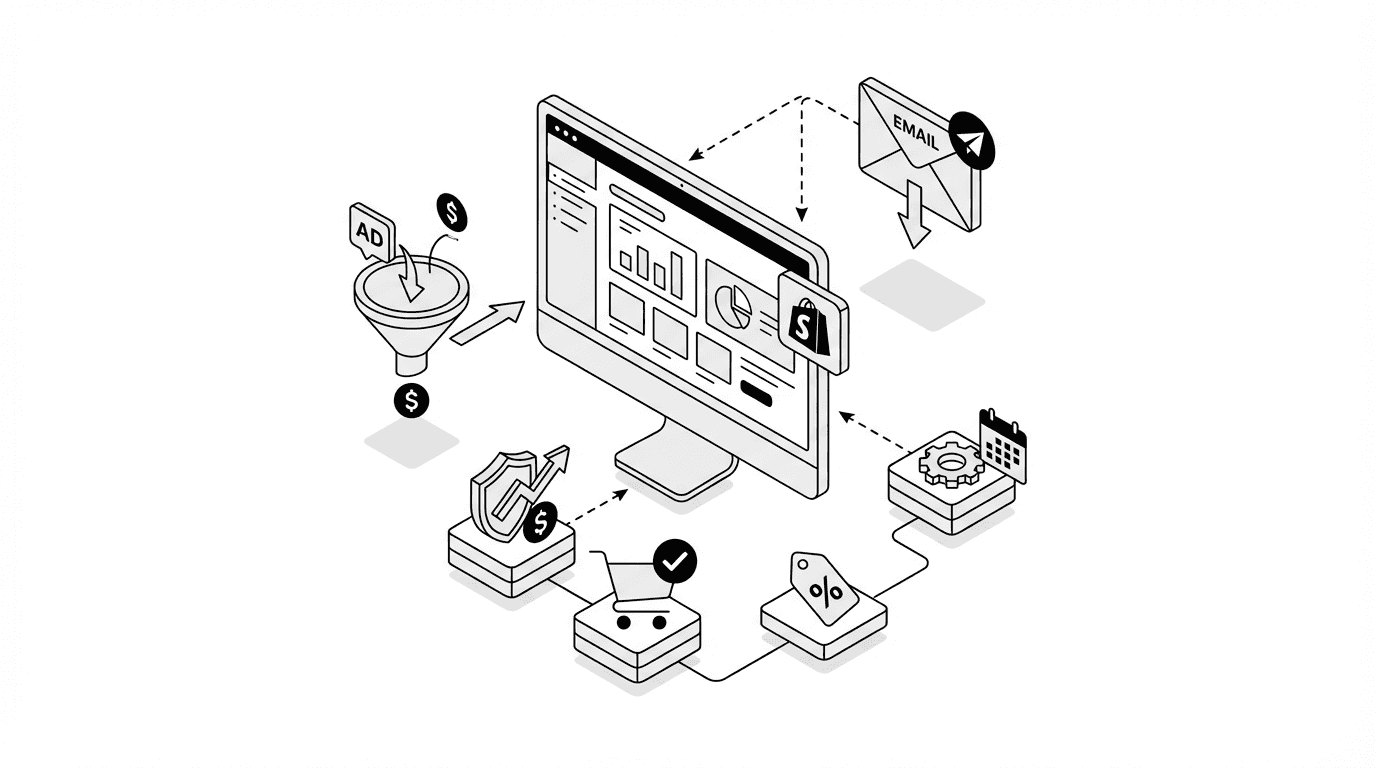
The implication: every dollar you spend on ads should have a corresponding email objective. If your ad is driving awareness traffic, your email objective is education. If your ad is retargeting past visitors, your email objective is objection handling. If your ad is promoting a specific product, your email objective is continuing that product's narrative. When these don't align, you're building two funnels instead of one, and the seam between them is where revenue leaks.
The Seven Objectives and How to Choose One
According to Shopify Staff in an article published April 16, 2026, there are seven key email marketing objectives that should inform your strategy. The article promises tips from successful businesses on execution. The value isn't in knowing all seven, it's in choosing the one that closes your biggest funnel gap right now.
Here's the decision framework: look at where your paid traffic is dropping off. If you're getting clicks but not conversions, your email objective should be cart recovery and first-purchase incentives. If you're converting but customers aren't returning, your objective should be repeat purchase campaigns. If you're driving awareness traffic that isn't ready to buy, your objective is trust-building and education. The tradeoff is focus. At $10K–$100K/month in ad spend, you don't have the list size or team bandwidth to pursue all seven objectives equally. Pick one, build the flows that support it, and measure whether it improves the economics of your paid ads.
Most founders set email objectives based on what they want to send, not what their traffic needs to hear. That's backwards. Your paid ads are already segmenting your audience by intent. Someone who clicked a cold prospecting ad is in a different mental state than someone who clicked a retargeting ad. Your email objectives need to match those states. A subscriber who came in through a lead magnet ad needs education. A subscriber who abandoned cart needs reassurance. A past customer who hasn't bought in 60 days needs re-engagement. If your email strategy doesn't map objectives to these segments, you're sending the same message to people with different problems.
Measure Email Objectives Against Ad Economics, Not Email Metrics
Open rates and click rates measure activity. The real question is whether your email objective improved the economics of your paid ads. Did it increase the percentage of ad traffic that converts? Did it increase lifetime value of customers acquired through ads? Did it reduce effective cost per acquisition by driving repeat purchases?
This requires connecting your email platform to your ad attribution. You need to know which email subscribers came from which ad campaigns, and whether those subscribers are converting at higher rates or buying more frequently than non-subscribers. If they're not, your email objectives aren't working, regardless of how good your open rates look.
The scenario where this matters: you're spending $5K/month on ads, getting 200 purchases, and your average customer buys once. If you set an email objective around repeat purchase and execute it well, you might move that to 1.3 purchases per customer. That's a 30% increase in revenue from the same ad spend. That's the difference between breakeven and profitable. But you only get there if your email objectives are defined in terms of customer behavior, not email metrics.
What to Do Next
Audit your current paid ad funnel. Where are people dropping off? What percentage of your ad traffic is captured in your email list? What happens to those subscribers in the first 30 days? If you don't have clear answers, you don't have clear objectives.
Then pick one objective from the seven that Shopify Staff outlines in their article. Don't try to implement all of them. Pick the one that closes your biggest gap. If you're losing people between ad click and purchase, focus on conversion-oriented objectives. If you're losing people after the first purchase, focus on retention-oriented objectives. Build the email flows that support that objective, and measure them against your ad performance. If your cost per acquisition drops or your customer lifetime value increases, you've aligned correctly. If not, you've learned where the real friction is.